Background
Dr. Kizza Besigye is a Ugandan opposition leader, ex-military officer, and four-time presidential candidate who has persistently challenged President Yoweri Museveni’s prolonged rule and faced numerous arrests and harassment over the years. His co-defendant, Hajj Obed (Obeid) Lutale, is a political advisor and a member of Dr. Besigye’s party, the People’s Front for Freedom (PFF), who has consistently backed Dr. Besigye’s activities. Dr. Besigye and Hajj Lutale travelled to Nairobi, Kenya, to attend Martha Karua’s book launch on 16 November 2024 but mysteriously disappeared in Nairobi. It was later revealed that Ugandan security personnel had abducted Dr. Besigye and Hajj Lutale from Kenya and secretly transported them to Uganda to avoid legal extradition procedures. For four days, their families and legal representatives were unaware of their whereabouts. On 20 November 2024, the two reappeared in Kampala, where Ugandan authorities presented them before a military tribunal. A political dissident’s abduction across borders is unequivocally illegal and violates all mandated extradition protocols in Uganda and Kenya. Such conduct infringes on Kenya’s sovereignty and the defendants’ right to due process.
Unfair military tribunal and Treason charges
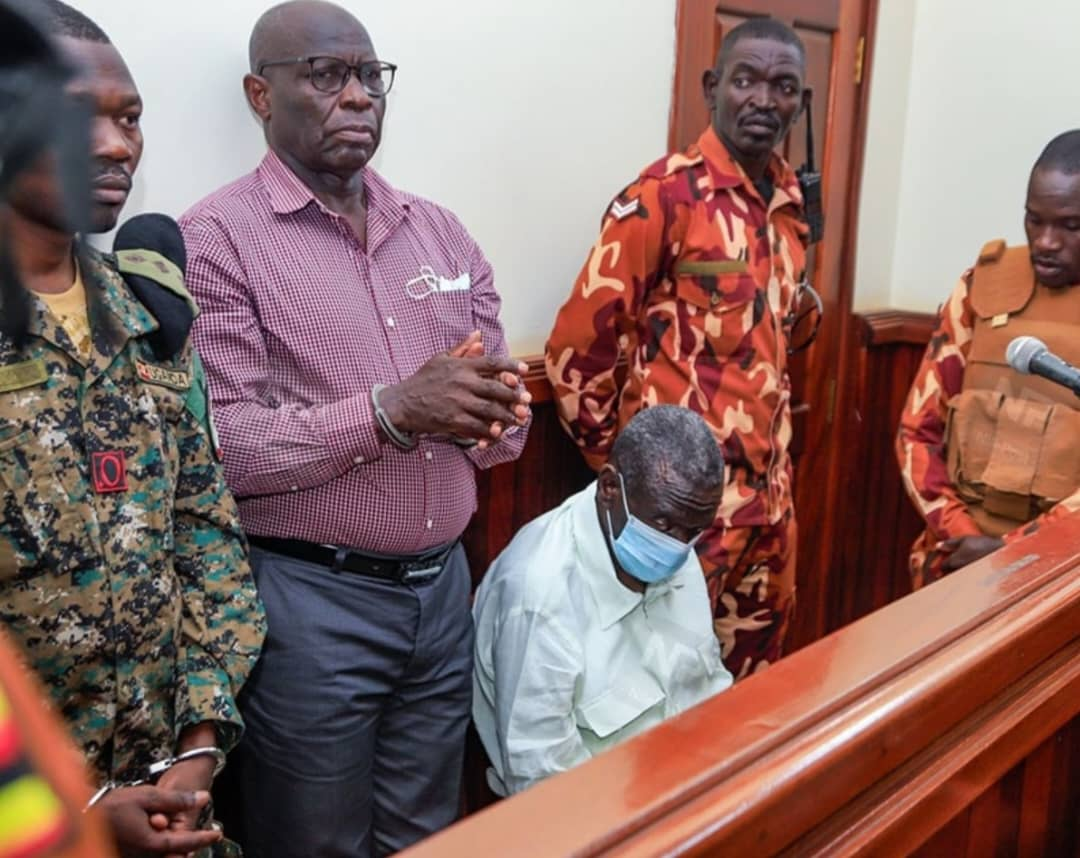
When Dr. Besigye and Hajj Lutale were brought before a Kampala military tribunal (General Court Martial at Makindye, Kampala), they were accused of serious security-related crimes. The initial charge sheet alleged that Dr. Besigye engaged in “soliciting logistical support and identifying military targets in Uganda with intent to compromise” Ugandan Defense Forces’ security and possession of a Ugandan military firearm. An additional charge of misprision of treason, defined as failing to report a traitorous conspiracy, was brought, reflecting the authorities’ intention to impose severe penalties on the defendants. The trial of a civilian, Dr. Besigye, a civilian, in military court was a significant violation of his rights.
Unlawful detention, refusal to release on bail, and violations of health rights
During their detention, Dr. Besigye and Hajj Lutale have been denied their fundamental rights to liberty and bail. As of April 2025, they were still held on remand in Kampala’s Luzira Prison, nearly five months after their arrest, with no trial date scheduled. In the High Court, the defendants requested bail, citing advanced age (in Besigye’s case), established residences, and willingness to adhere to conditions. By April 11, 2025, Dr. Besigye had been detained without trial for 147 days, yet his bail application was rejected. The court controversially stated that “the balance of convenience lies with national security and public safety,” backing the prosecution’s concerning claims that the men’s influence could hinder investigations. Judge Rosette Kania recognised that while Dr. Besigye and Hajj Lutale met several bail requirements, including having a fixed address and substantial sureties, because the court considered them too dangerous to release, despite lacking proven guilt, rejecting bail was appropriate. The court prioritised the government’s unsubstantiated security assertions over the people’s constitutional right to the presumption of innocence.
Dr. Besigye’s health has clearly declined; he appears weak, and his attorney’s requests for appropriate medical attention have so far been denied. Dr. Besigye’s ongoing confinement is particularly harsh given his poor condition and wheelchair use, as seen in court. Reports indicate that Dr. Besigye suffers from severe illnesses that have been worsened by the stress of imprisonment. This is an effective denial of a detainee’s access to adequate medical care, a right protected by both Ugandan and international law. The 1995 Ugandan Constitution clearly states that anyone detained shall be allowed access to medical treatment, including, at the request and at the cost of that person, access to private medical treatment under Article 23(5) of the Ugandan Constitution. Dr. Besigye was denied these rights during the early days of his arrest. The Ugandan security agencies’ actions violated protections under Article 44(a) of the Constitution, which affirms that freedom from torture and mistreatment is non-derogable.
Rule of law abuse and breaches of human rights
Dr Besigye and Hajj Lutale’s continued detention, and imprisonment represents a serious breach of fundamental human rights and a clear abuse of legal authority by Ugandan officials. Their detention without proper legal procedure and trial, infringes on the constitutional right to personal liberty as outlined in Article 23 of Uganda’s Constitution and Article 6 of the African Charter on Human and Peoples’ Rights (African Charter). With these actions, Uganda has effectively punished individuals without a conviction, violating the presumption of innocence enshrined in both national and international human rights law.
Their right to a fair trial has been repeatedly violated. After their detention, they were denied legal representation and brought before a military tribunal, despite a Constitutional Court ruling that prohibits the trial of civilians in military courts. This clearly breaches Article 28 of Uganda’s Constitution and Article 14 of the International Covenant on Civil and Political Rights (ICCPR). The treason charges appear to be politically motivated, and the lack of progress towards a proper trial undermines their right to a timely hearing or release underscoring the idea that justice delayed is justice denied.
The conditions Dr Besigye and Hajj Lutale’s detention constitute cruel, inhuman, and degrading treatment, even though no physical torture has occurred. The psychological trauma caused by kidnapping in a foreign country, extended incommunicado detention, and confinement in a harsh prison environment while severely ill seriously violate the right to human dignity. Dr. Besigye was denied proper medical care, breaching Article 23(5)(c) of Uganda’s Constitution and international standards, including the UN’s Mandela Rules, which state that prisoners must receive healthcare comparable to that available in the general community.
Uganda’s actions further breach its commitments under international and regional human rights treaties. As a signatory to both the African Charter and the ICCPR, Uganda is obliged to uphold rights such as the prohibition of arbitrary detention, the right to a fair trial, and protection against inhumane treatment. By kidnapping and detaining Dr. Besigye and Hajj Lutale, Uganda has violated these treaties and disregarded the principles of regional cooperation and human rights the East African Community (EAC) upholds.
The treatment of Dr. Besigye and Hajj Lutale reveals Uganda’s worsening human rights crisis. It illustrates the government’s willingness to punish political opposition even if that means ignoring its own constitution, breaching regional norms, and violating international law. This case underscores a serious legal injustice, is a stark reminder of the political opposition’s diminishing space in Uganda and highlights the urgent need for both national and international accountability.
Recommendations
Bail must be promptly granted to Dr. Besigye and Hajj Lutale on grounds of poor health and extended detention. They must be given adequate healthcare and private medical treatment as guaranteed by the Constitution. It must be ensured that they receive a fair trial in civilian court, in line with the 2025 Supreme Court ruling. All security personnel involved in the unlawful cross-border abductions must be investigated and held accountable.
Dr. Besigye and Hajj Lutale must have guaranteed access to legal counsel and their rights as detainees, as specified in Article 23(5) of the Constitution, must be protected. The Ugandan government must comply with judicial mandates and timelines, especially the 180-day bail requirement for uncharged defendants. The African Commission on Human and Peoples’ Rights should address the case and seek redress for violations of the Charter. The EAC should examine Uganda’s breach of good governance commitments as outlined in the EAC Treaty.
Article by Students of Master of Laws in Human Rights and Democratisation in Africa (LLM-HRDA) Centre for Human Rights, Faculty of Law, University of Pretoria Class of 2025.